InfraDev handles
- Accurate calculation of all deductions
- Timely remittances to the CRA and Revenu Québec
- T4 and RL-1 slips issued and filed
- Provincial variations applied for each employee
- One point of contact for payroll questions

Canadian payroll means withholding income tax, CPP (QPP in Québec), and EI from every pay, adding the employer's share, remitting it all to the CRA on schedule, and issuing T4 slips (RL-1 in Québec) each February. Here is how each piece works for a foreign employer.
Published November 22, 2025 · Updated November 3, 2026
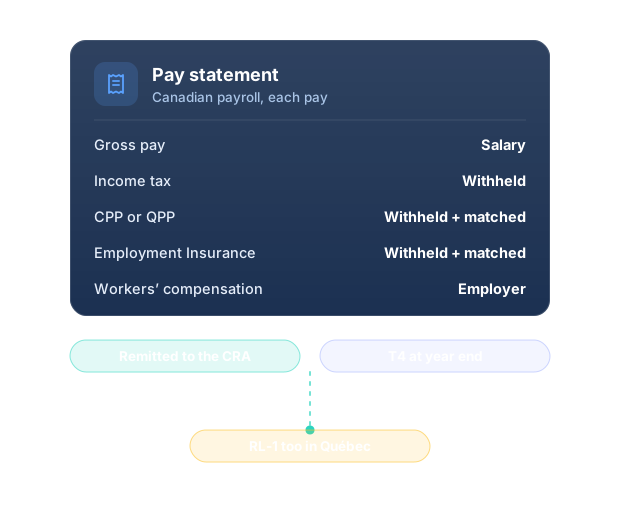
What must be deducted from Canadian employee paychecks, who pays, and where to find the current rates.
| Deduction | Who pays | How it works | Official rates |
|---|---|---|---|
| Income tax | Employee (withheld by you) | Federal and provincial tax based on the employee’s province of residence, earnings, and TD1 forms | CRA payroll |
| Canada Pension Plan (CPP) | Employee and employer, equal shares | Contributions on earnings up to the first ceiling, plus CPP2 on earnings between the first and second ceilings | Current CPP rates |
| Employment Insurance (EI) | Employee; employer pays 1.4× | Premiums on insurable earnings up to the yearly maximum | Current EI rates |
| Québec: QPP and QPIP | Employee and employer | QPP replaces CPP; QPIP adds parental insurance and lowers the EI rate; remitted to Revenu Québec | Revenu Québec |
Rates and maximums change every January, so we link to the official pages rather than repeat figures that go out of date.
The CRA sets your remittance frequency from your average monthly withholding amount:
What you remit:
Late remittances result in penalties and interest charges, and the CRA can require more frequent remittances from repeat offenders. The CRA requirements guide lists the penalty rates and deadlines.
Employers must issue T4 slips to all employees, and file the T4 Summary with the CRA, by the last day of February following the tax year. The T4 reports:
Used for contractors and consultants: fees for services paid during the year are reported on a T4A when they total more than $500.
Québec has additional requirements:
Most other provinces follow federal CPP and EI rules, but provincial income tax varies significantly: use the tax tables for each employee's province of residence. The province explorer summarizes the differences.
With InfraDev as the employer of record, Canadian payroll runs under our accounts and our name.
Registration, payroll accounts, deadlines, and penalties.
Minimum standards, vacation, notice, and termination.
Employment rules and payroll contributions by province.
InfraDev's team reviews this page twice a year and when a rule it describes changes. General information, not legal or tax advice. How we review our guides · Report an error
Tell us about the role and province. We'll confirm the total employment cost and timing on a short call.