
Blog
Articles on narrower questions U.S. companies ask when hiring in Canada. For the full picture, start with the hiring guide or compare your options.
Articles
-
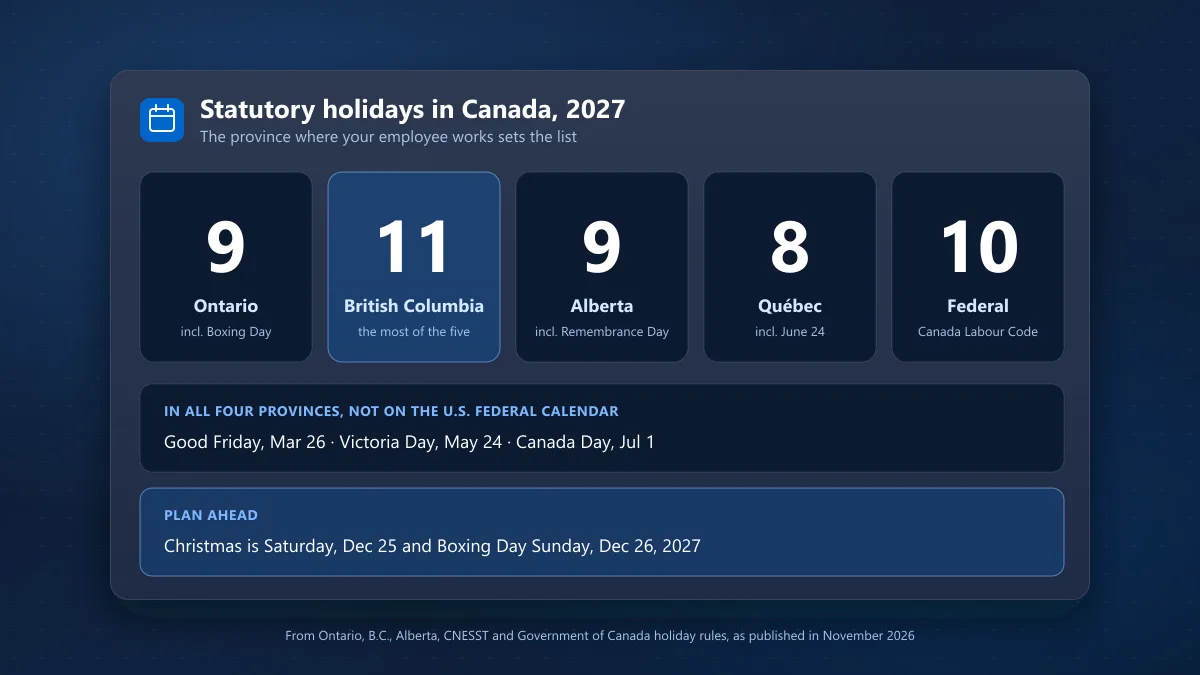
Statutory holidays in Canada 2027: the dates by province for U.S. employers
Statutory holidays in Canada in 2027 depend on the province where your employee works: nine in Ontario and Alberta, eleven in British Columbia, eight in Québec, and ten for federally regulated employers. Christmas falls on a Saturday and Boxing Day on a Sunday, and each province handles that differently.
Read the article -
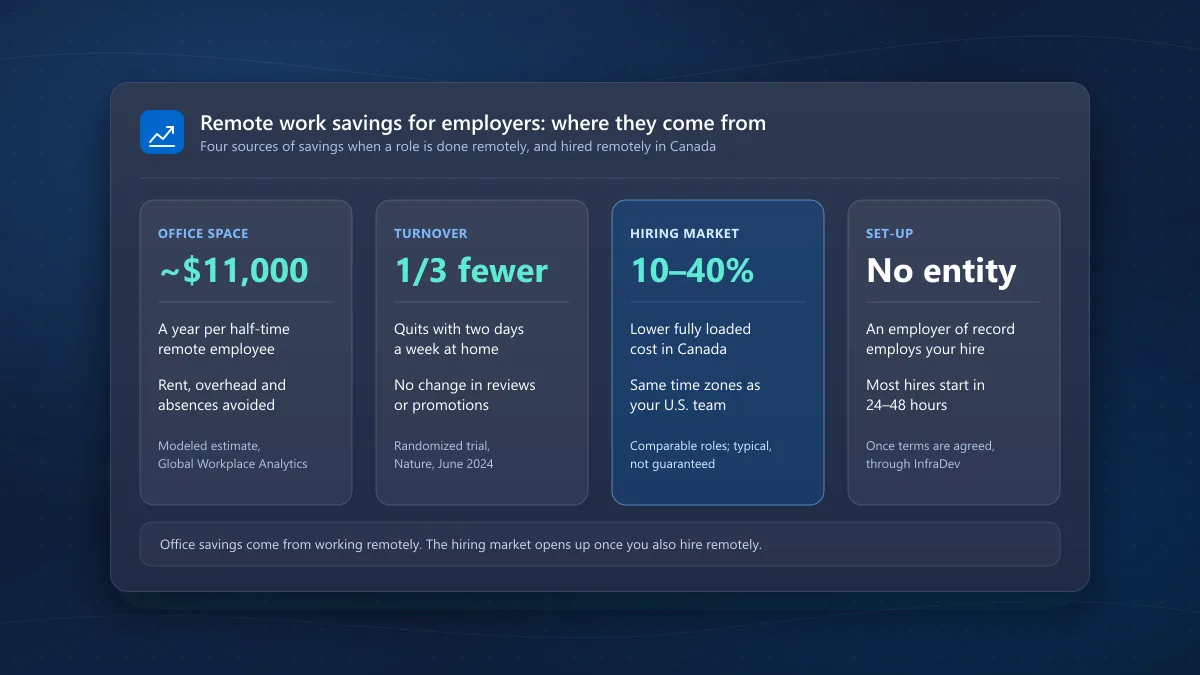
Remote work savings for employers: how much a company saves by hiring remotely
Where remote work savings for employers come from: office space, lower turnover and a wider hiring market. What the research measured, how hiring remotely in Canada typically lowers the cost of comparable roles by 10–40%, and seven ways to keep more of the saving.
Read the article -
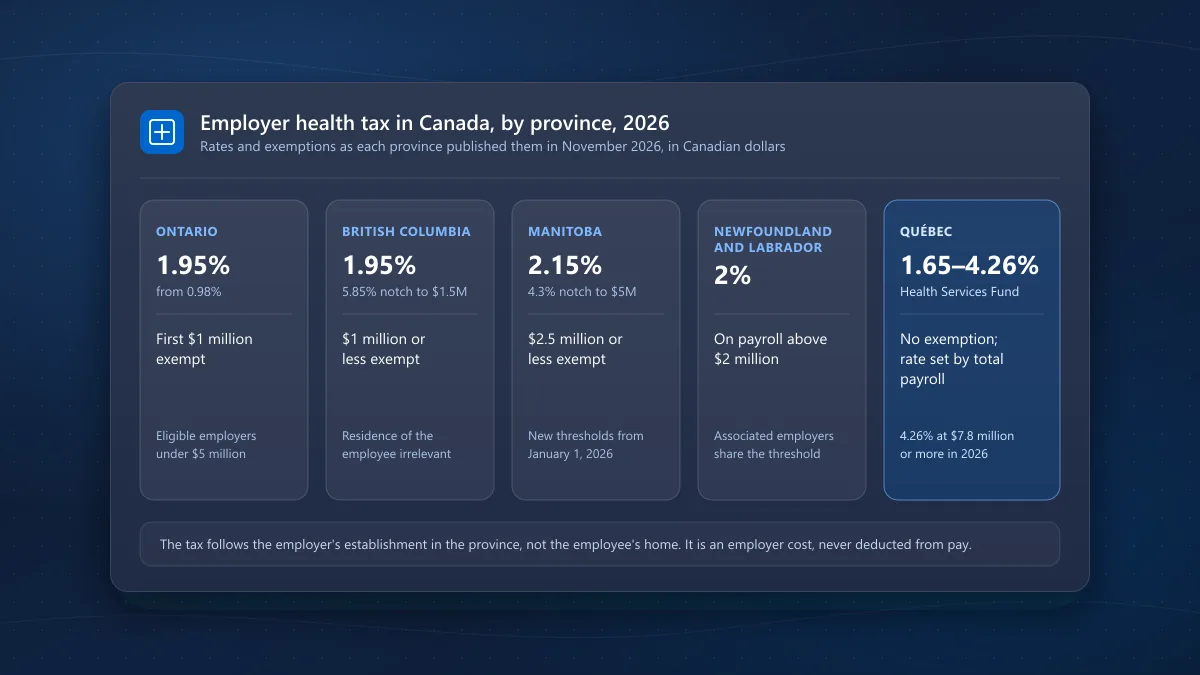
Employer health tax in Canada: the 2026 rates by province, and when a U.S. employer pays
Ontario, British Columbia, Manitoba, Newfoundland and Labrador, and Québec each charge employers a payroll tax for health care in 2026. Where a province spells out the test, the tax follows the employer's place of business, not the employee's home, and four of the five exempt smaller payrolls.
Read the article -
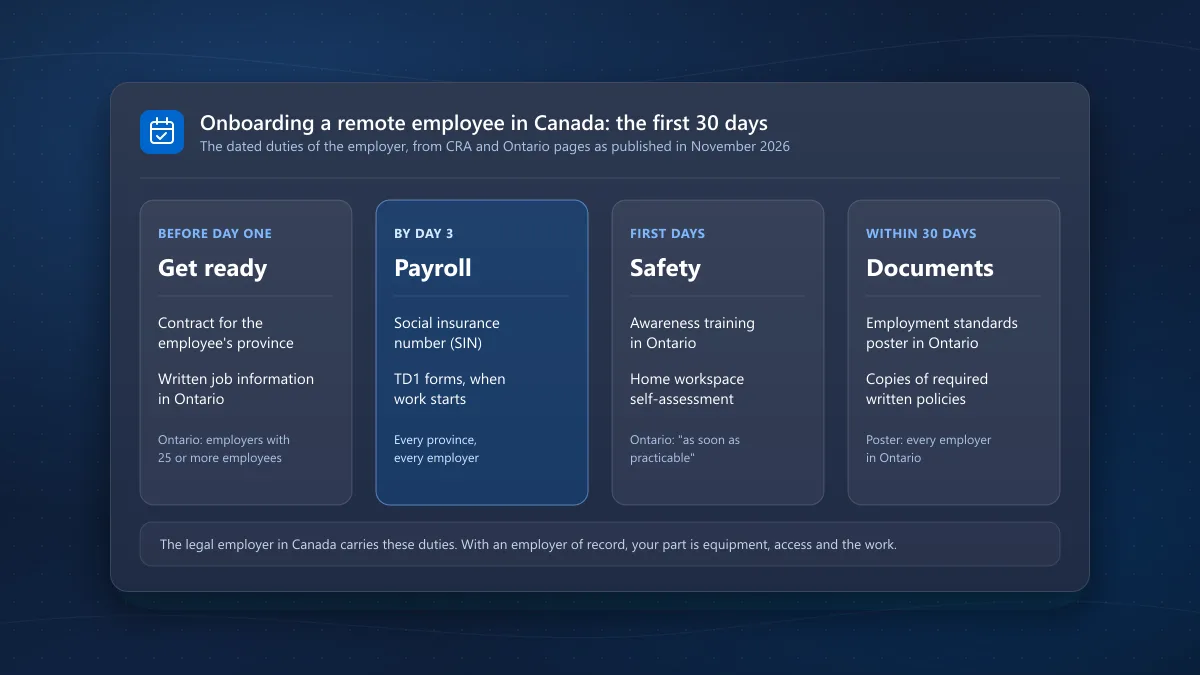
Onboarding a remote employee in Canada: the first 30 days for a U.S. employer
A remote onboarding checklist for Canada, by deadline: the social insurance number within 3 days of the start, the TD1 tax forms when work begins, Ontario's written job information before day one for larger employers and its poster within 30 days, and safety training that reaches the home office.
Read the article -
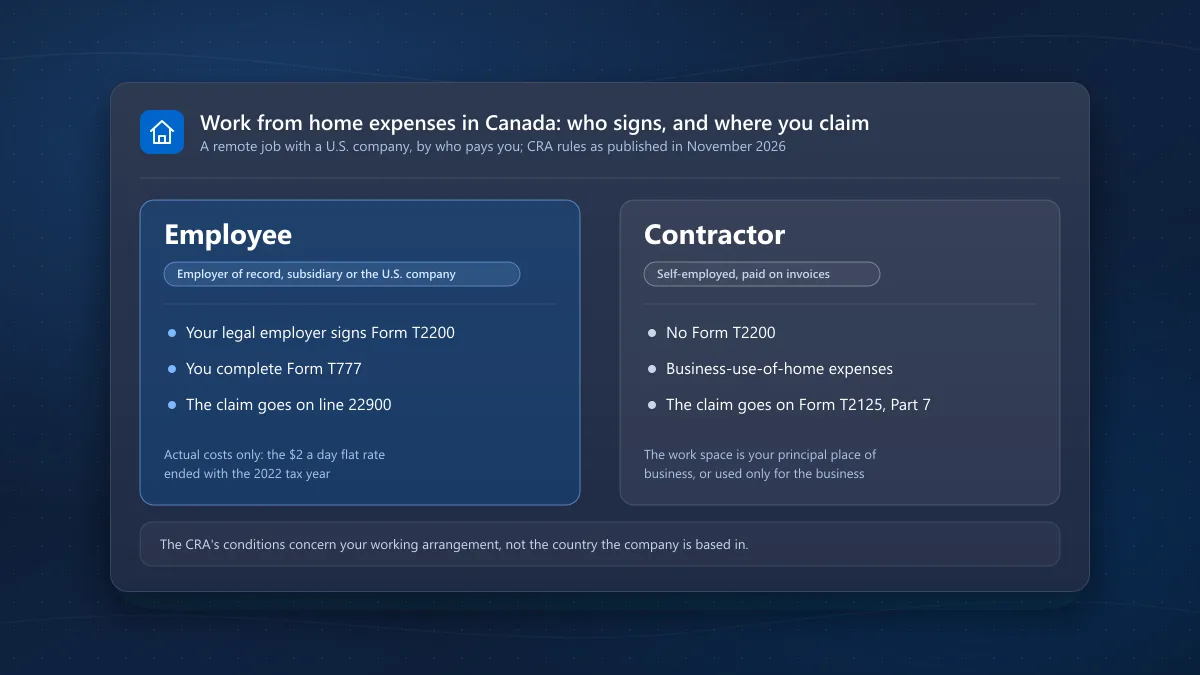
Work from home expenses in Canada when your remote job is with a U.S. company
A remote employee in Canada can deduct work from home expenses when the employer is a U.S. company. The Canada Revenue Agency's main conditions: you were required to work from home, you paid the costs yourself, and your employer signed Form T2200. Who signs it depends on who employs you. A contractor claims a different way.
Read the article -
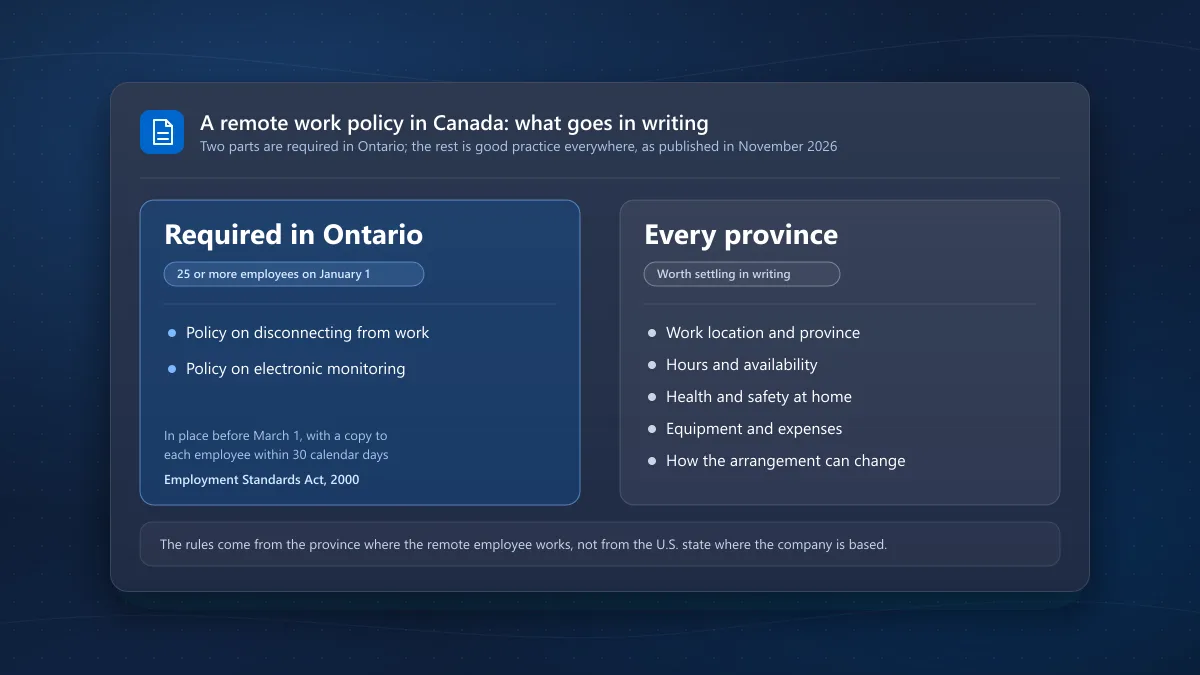
Remote work policy in Canada: what a U.S. employer has to put in writing
No Canadian law requires a remote work policy by that name, but parts of one are mandatory. In Ontario, an employer with 25 or more employees must have written policies on disconnecting from work and on electronic monitoring. Health and safety law reaches the home office, and regulators in Québec and British Columbia point employers to a written policy.
Read the article -
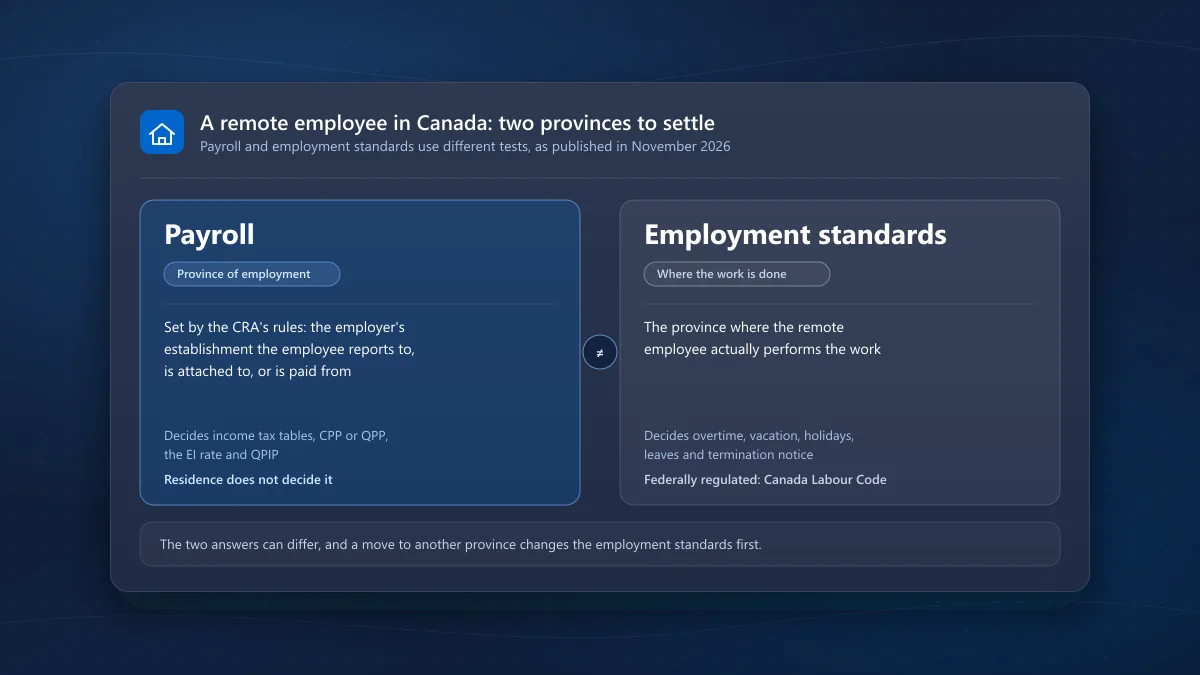
Province of employment for remote employees in Canada: what a U.S. employer applies
The province of employment for remote employees in Canada is set by the CRA's payroll rules, not by where the person lives. A fully remote employee takes the province of the employer's establishment they are attached to, or the one that pays them. Employment standards follow the province where the work is done, so the two can differ.
Read the article -
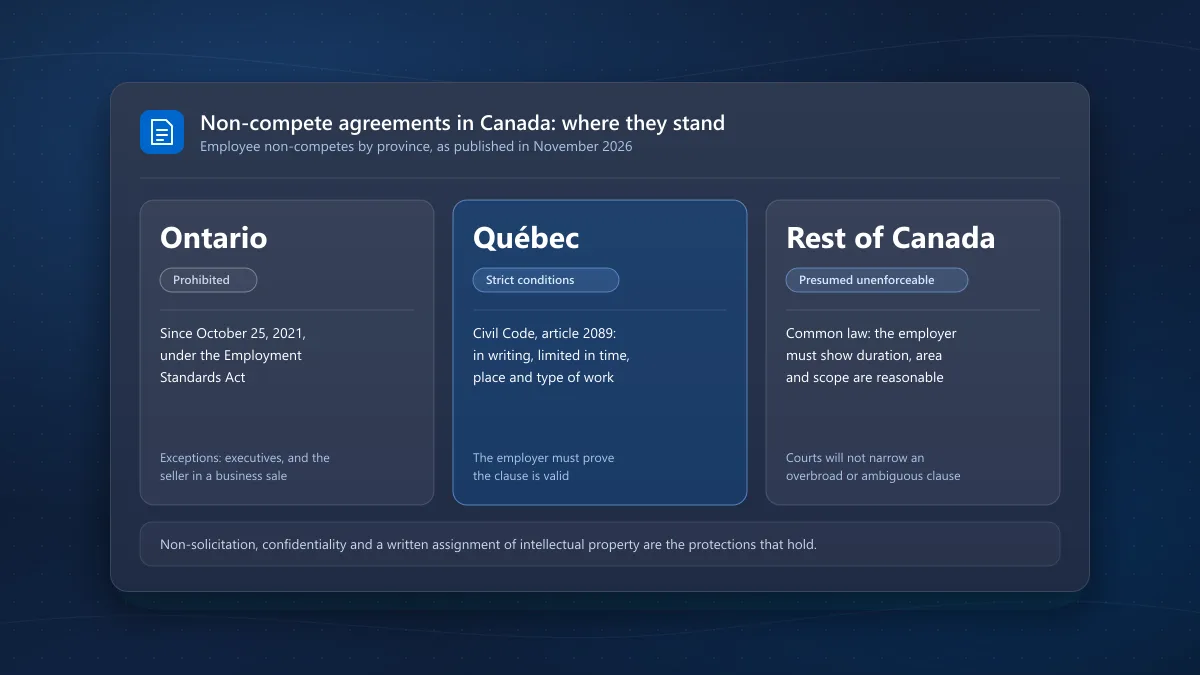
Non-compete agreements in Canada: what a U.S. employer can still enforce
Non-compete agreements in Canada are mostly unenforceable for employees. Ontario has banned them since October 25, 2021, except for executives and the sale of a business. Québec allows one only in writing and within strict limits. Elsewhere, courts presume them unenforceable unless the employer proves they are reasonable.
Read the article -
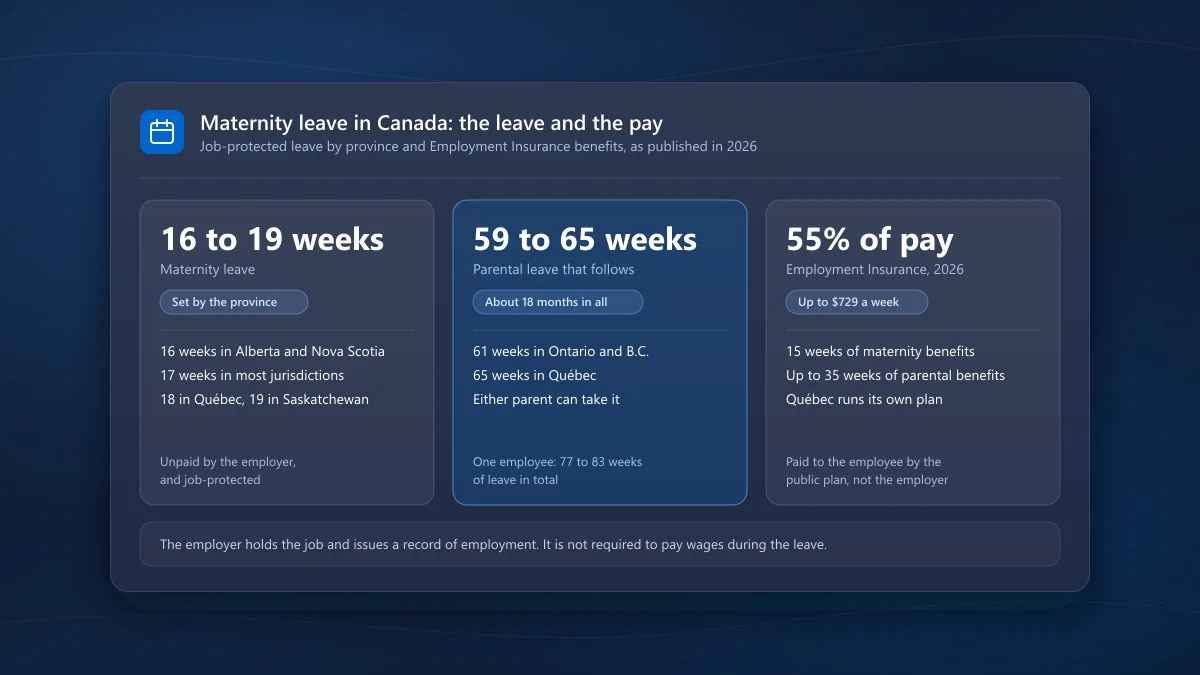
Maternity leave in Canada: what a U.S. employer owes, and what Employment Insurance pays
Maternity leave in Canada is unpaid, job-protected leave set by the province where the employee works: 16 to 19 weeks for the birth mother, then parental leave that brings the total to about 18 months. The employer holds the job and does not pay wages. Employment Insurance, or Québec's own plan, pays the employee.
Read the article -
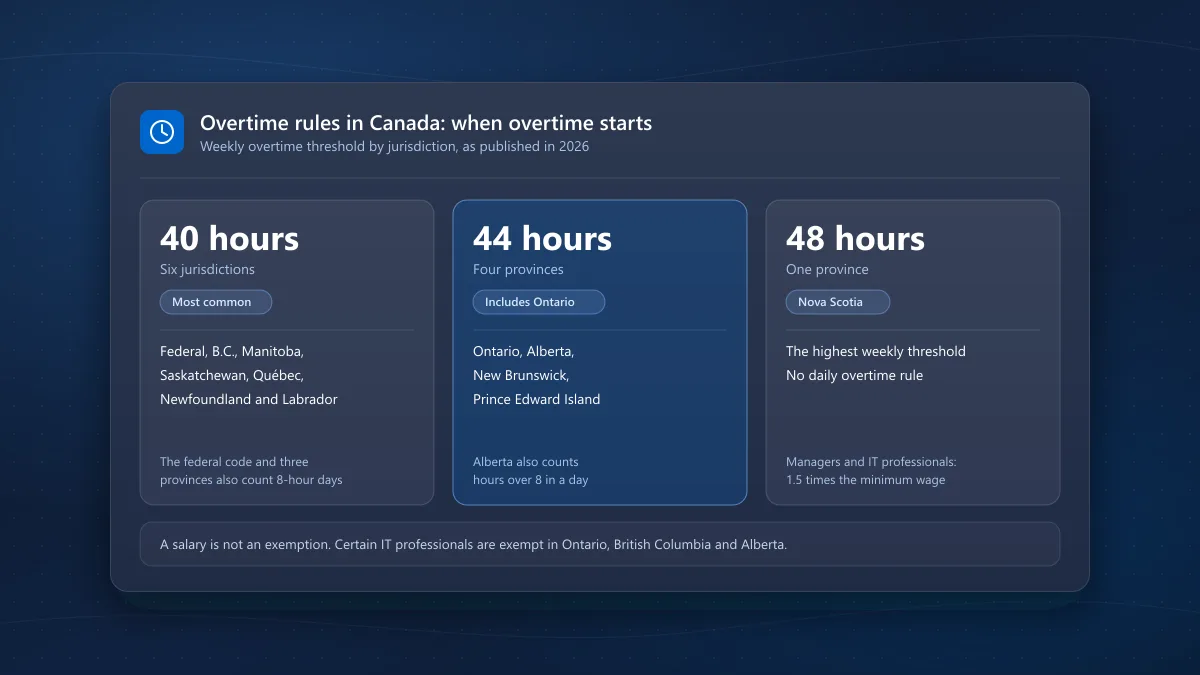
Overtime rules in Canada: thresholds by province, and who is exempt
Overtime rules in Canada follow the province where the employee works. Most employees earn overtime after 40 or 44 hours a week, and in several provinces after 8 hours a day, at 1.5 times their wage. A salary does not remove the right, and certain IT professionals are exempt in Ontario, British Columbia and Alberta.
Read the article -
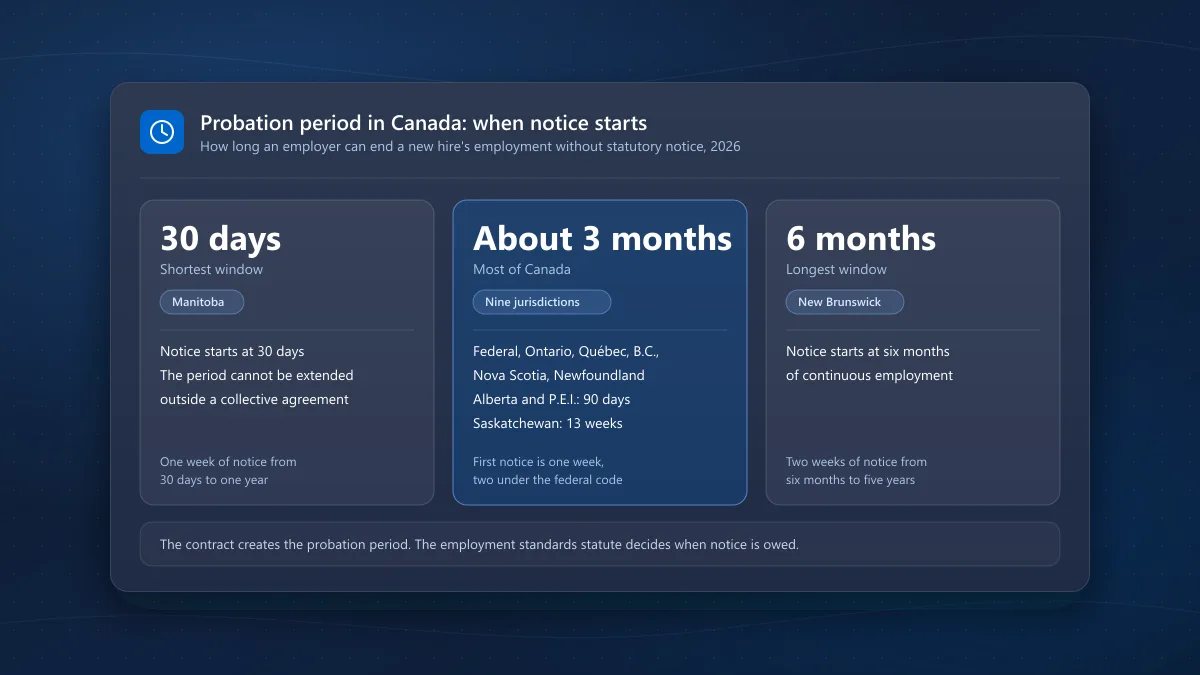
Probation period in Canada: the rules by province for U.S. employers
A probation period in Canada exists only if the employment contract creates one. No statute grants it automatically. What each province's employment standards law sets is the length of employment before termination notice is owed: 30 days in Manitoba, about three months in most of the country and six months in New Brunswick. A contract cannot make that window longer.
Read the article -
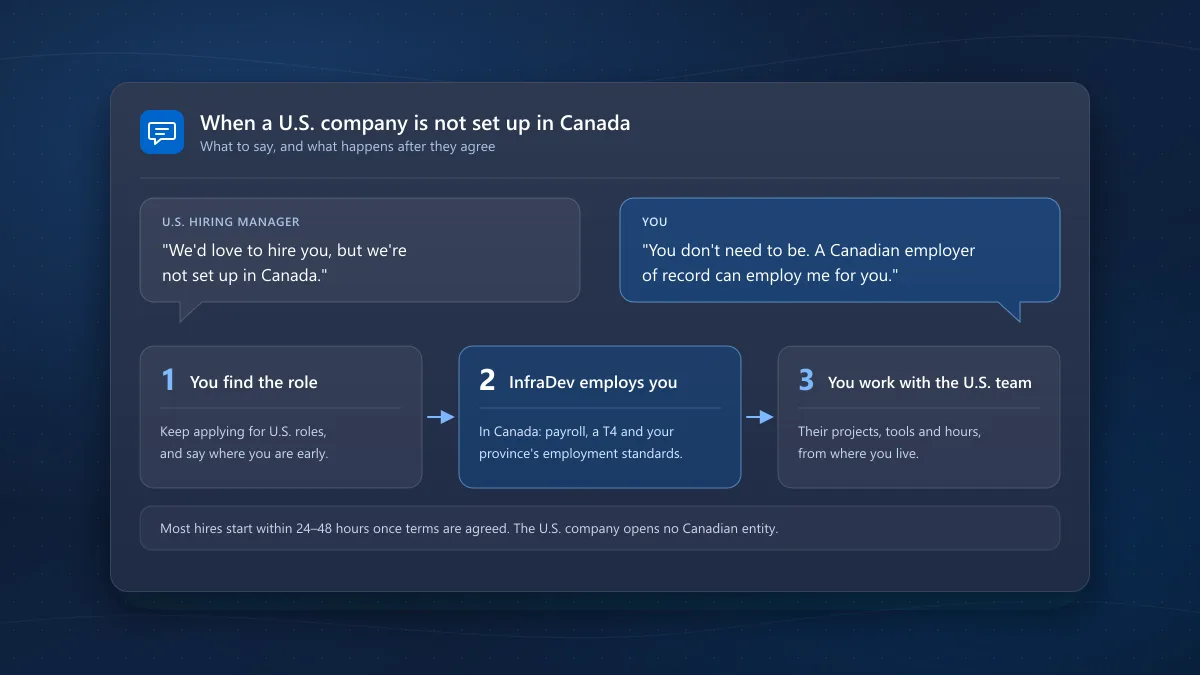
A U.S. company wants to hire you but isn't set up in Canada: what to say
When a U.S. company says it would like to hire you but is not set up in Canada, the hire is not over. The company cannot run Canadian payroll from the United States, and it does not have to. A Canadian employer of record can employ you on its behalf. Say so, send the short email below, and keep applying for U.S. roles.
Read the article -
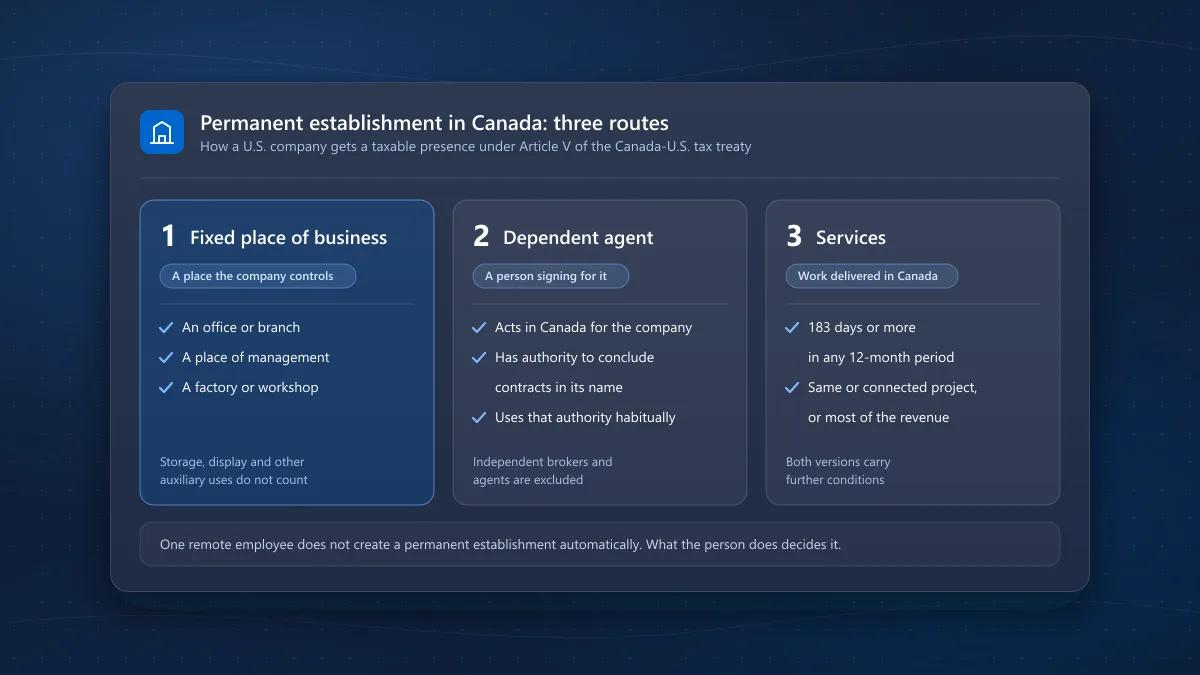
Permanent establishment in Canada: when a U.S. company's hire creates a taxable presence
A permanent establishment in Canada is a taxable presence under the Canada-U.S. tax treaty. A U.S. company gets one through a fixed place of business, a person in Canada who habitually signs contracts in its name, or services delivered in Canada for 183 days or more. Hiring one remote employee does not create one automatically. What the person does, and where, decides it.
Read the article -
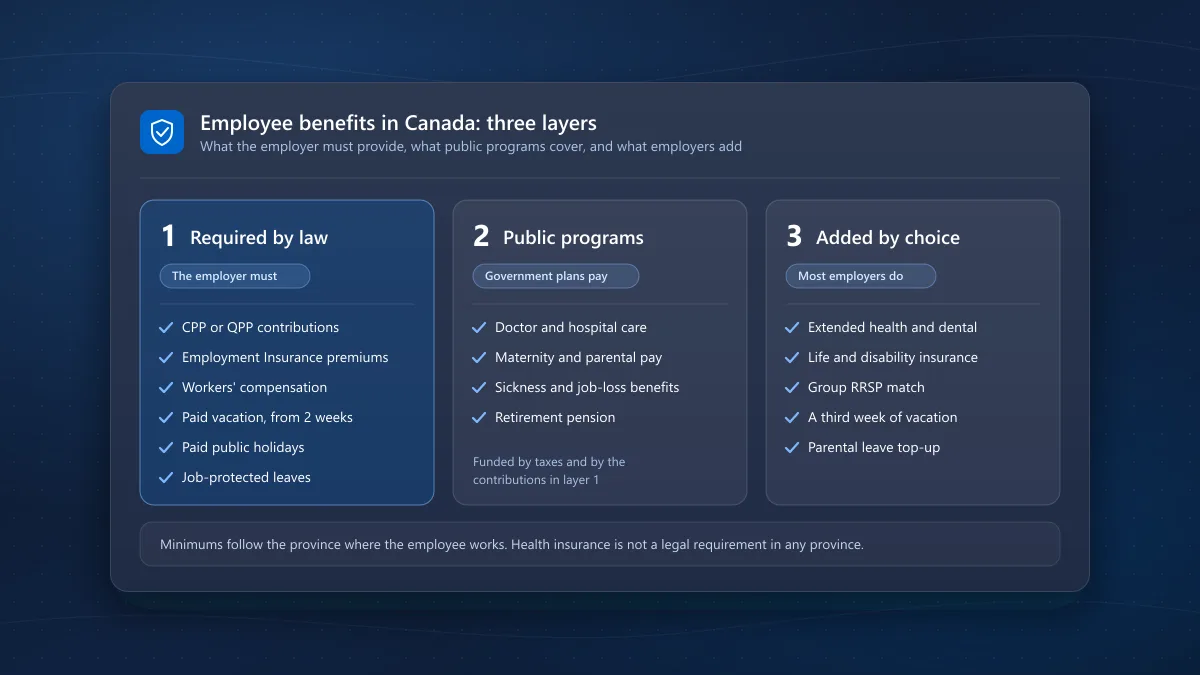
Employee benefits in Canada: what a U.S. employer must provide and what Canadians expect
Employee benefits in Canada come in three layers. The law requires employer contributions to the Canada Pension Plan and Employment Insurance, workers' compensation, paid vacation, paid public holidays and job-protected leaves. Public programs cover doctor and hospital care and pay parental leave. Supplementary health and dental cover, a retirement plan match and extra vacation are optional, and most candidates expect them.
Read the article -
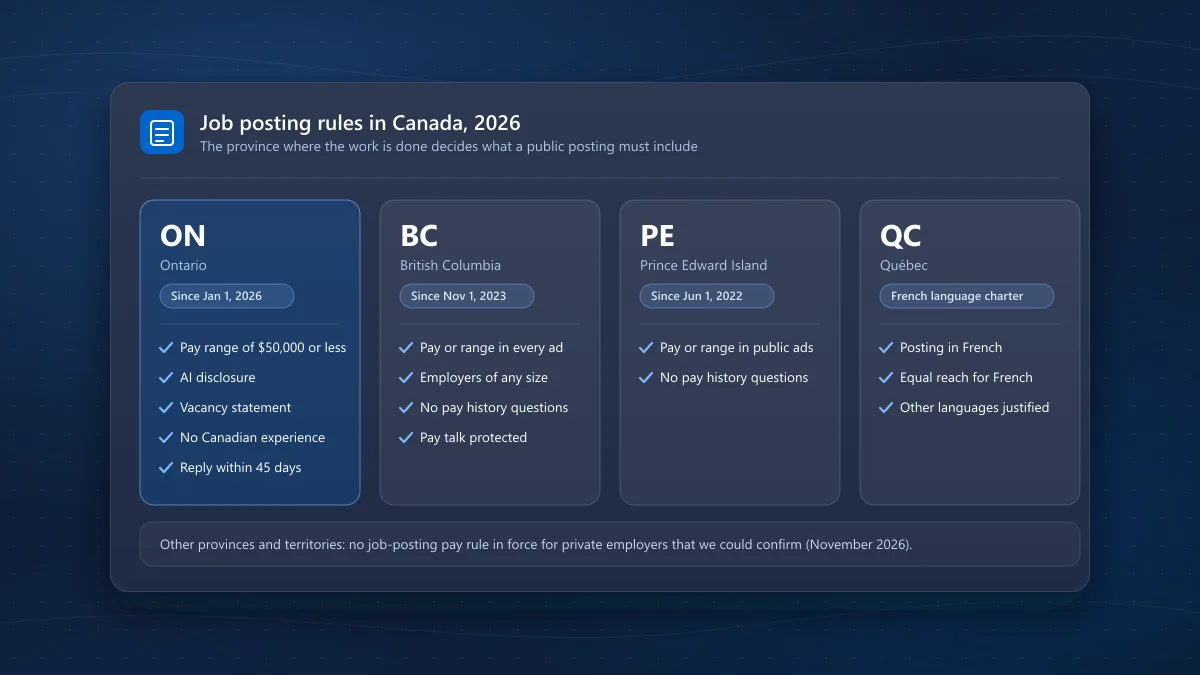
Job posting rules in Canada: pay ranges, AI disclosure and what U.S. employers must include
A U.S. company advertising a job in Canada follows the rules of the province where the person will work. Ontario, British Columbia and Prince Edward Island require the expected pay or a pay range in public job postings; since January 1, 2026, Ontario also requires AI disclosure, a vacancy statement and a reply to interviewed applicants within 45 days. Québec requires the posting in French.
Read the article -
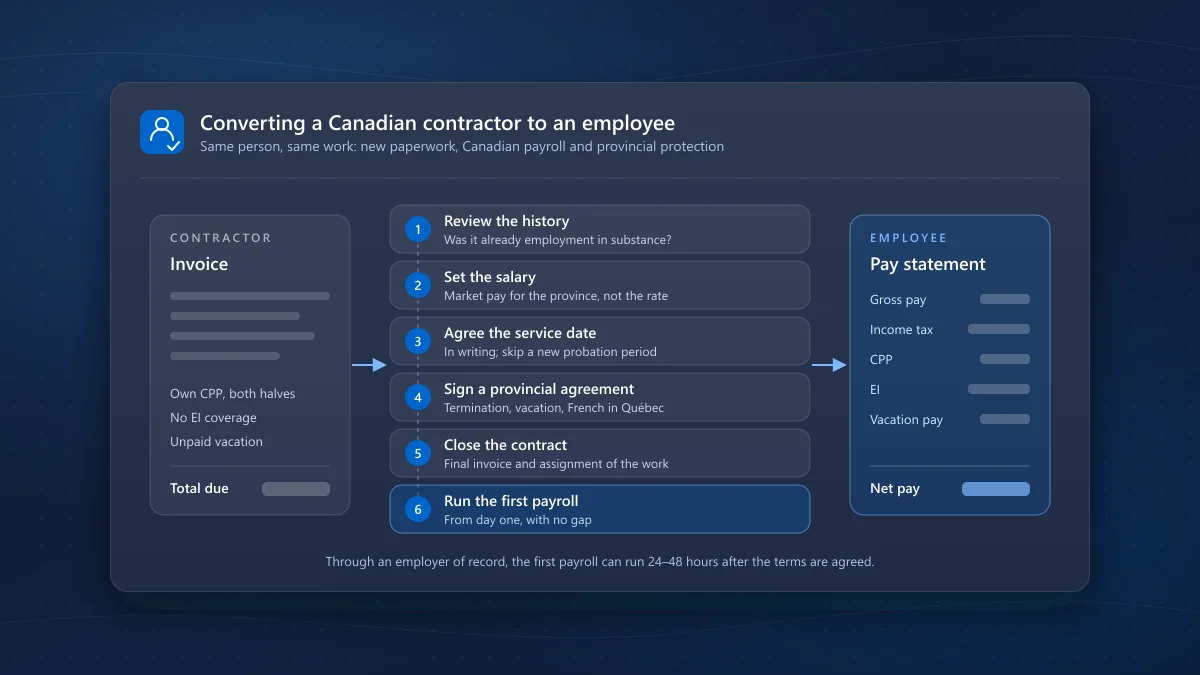
Converting a Canadian contractor to an employee: a guide for U.S. companies
A U.S. company can convert a Canadian contractor to an employee without opening a Canadian entity: an employer of record employs them, or the company registers as an employer with the CRA. The work is in six steps: review the history, set the salary, settle the service date, sign a provincial agreement, close the contract and start payroll on day one.
Read the article -
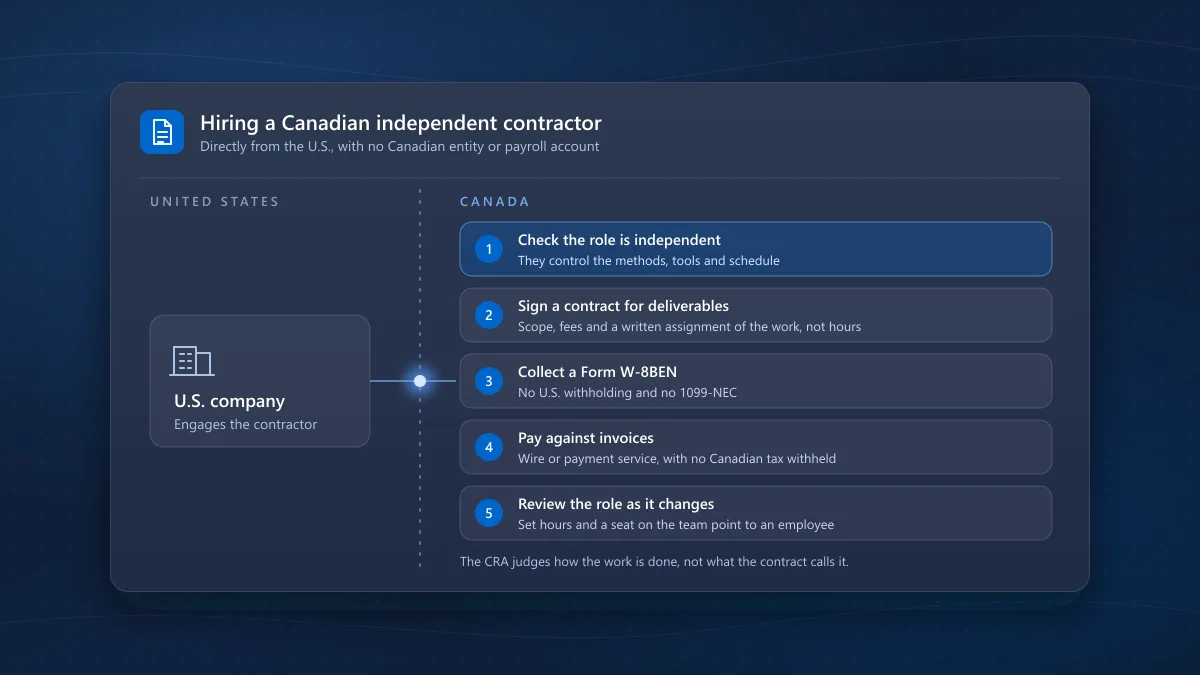
How a U.S. company hires a Canadian independent contractor
A U.S. company can hire a Canadian independent contractor directly, with no Canadian entity and no payroll registration. It needs a role that is genuinely independent, a contract that describes deliverables rather than hours, a Form W-8BEN, and payment against invoices.
Read the article -
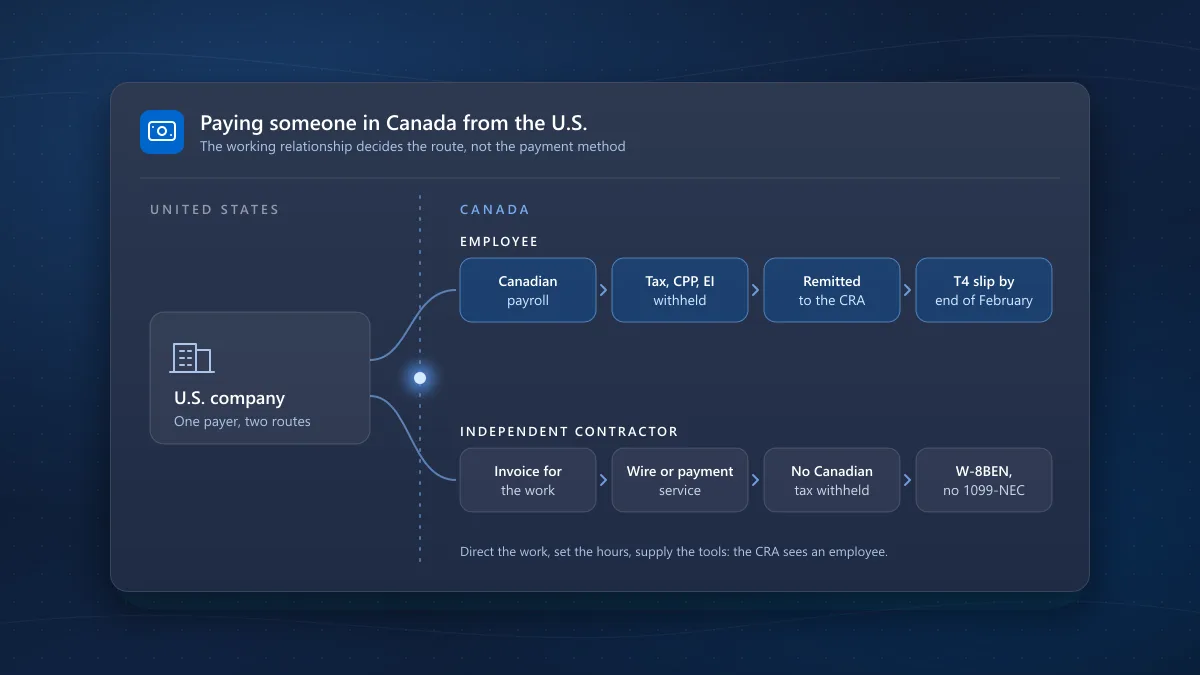
How to pay someone in Canada from the U.S.
How a U.S. company pays someone who works in Canada depends on whether they are an employee or a contractor. Employees are paid through Canadian payroll, with income tax, CPP and EI withheld and remitted to the CRA. Genuine contractors invoice and are paid by bank transfer, with no Canadian tax withheld.
Read the article -
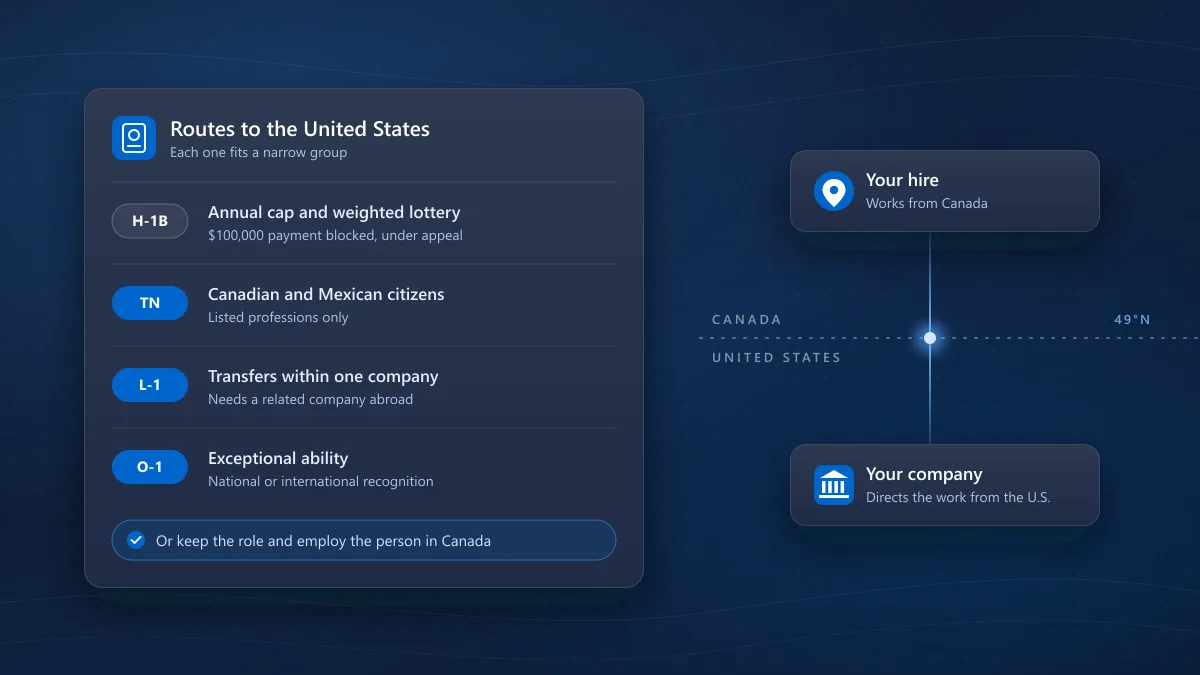
H-1B alternatives for U.S. employers: when hiring in Canada makes sense
The main alternatives to an H-1B are TN status, an L-1 transfer, an O-1, or employing the person in Canada. How each route works, who qualifies, and what to do when a U.S. visa is not an option.
Read the article -
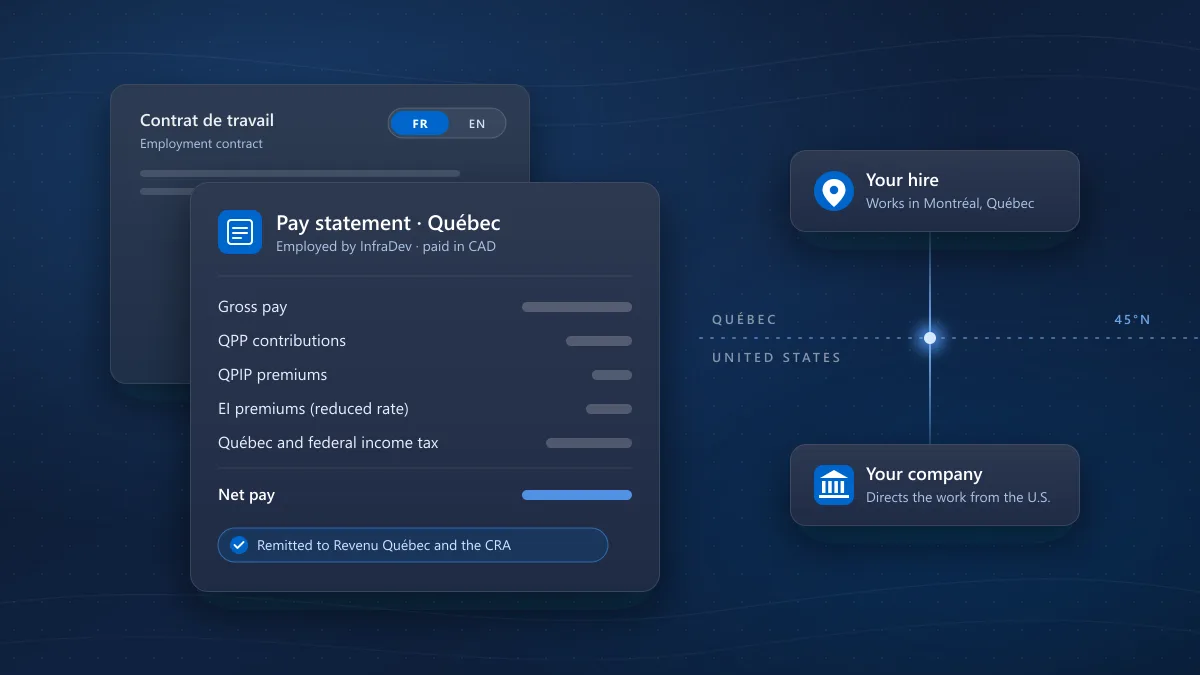
Hiring an employee in Québec: what U.S. companies should know
What changes when your Canadian hire lives in Québec: French job offers and contracts, payroll through Revenu Québec, Québec labour standards, and Law 25.
Read the article -
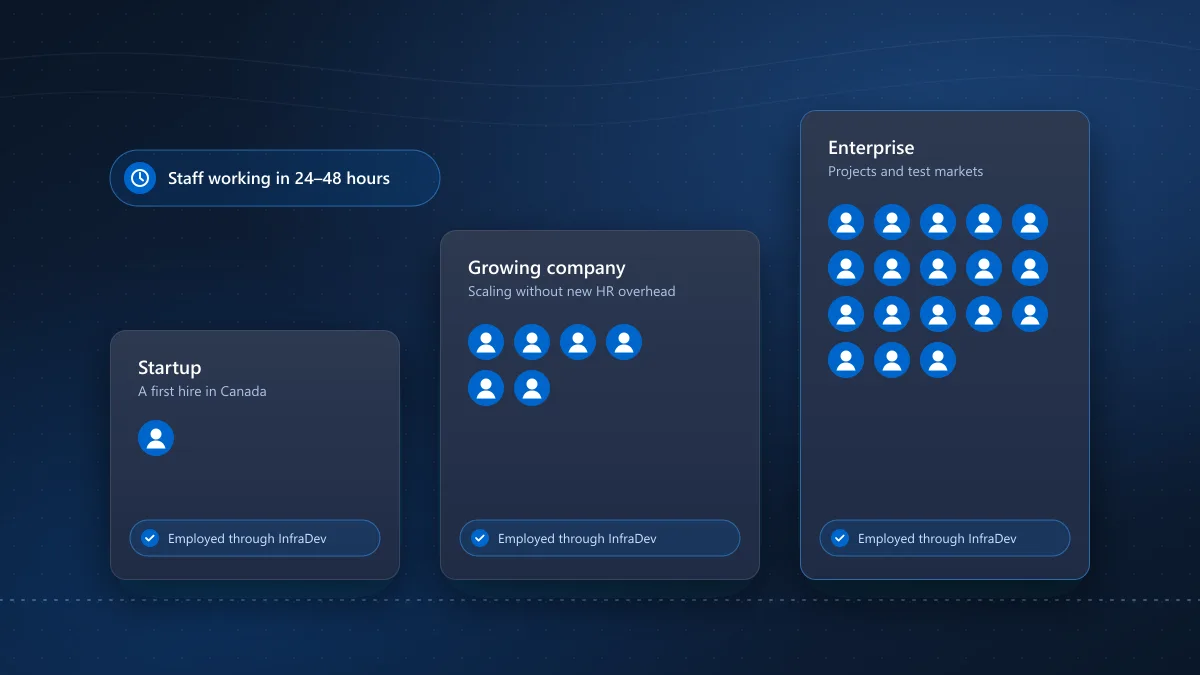
The benefits of an employer of record in Canada, at any company size
Why U.S. companies hire in Canada through an employer of record instead of opening a Canadian entity: no entity to run, hires starting in 24–48 hours, compliance carried by the legal employer, one monthly invoice, and the freedom to change course. What each benefit means for a startup, a growing company and an enterprise, and when your own entity is the better answer.
Read the article -
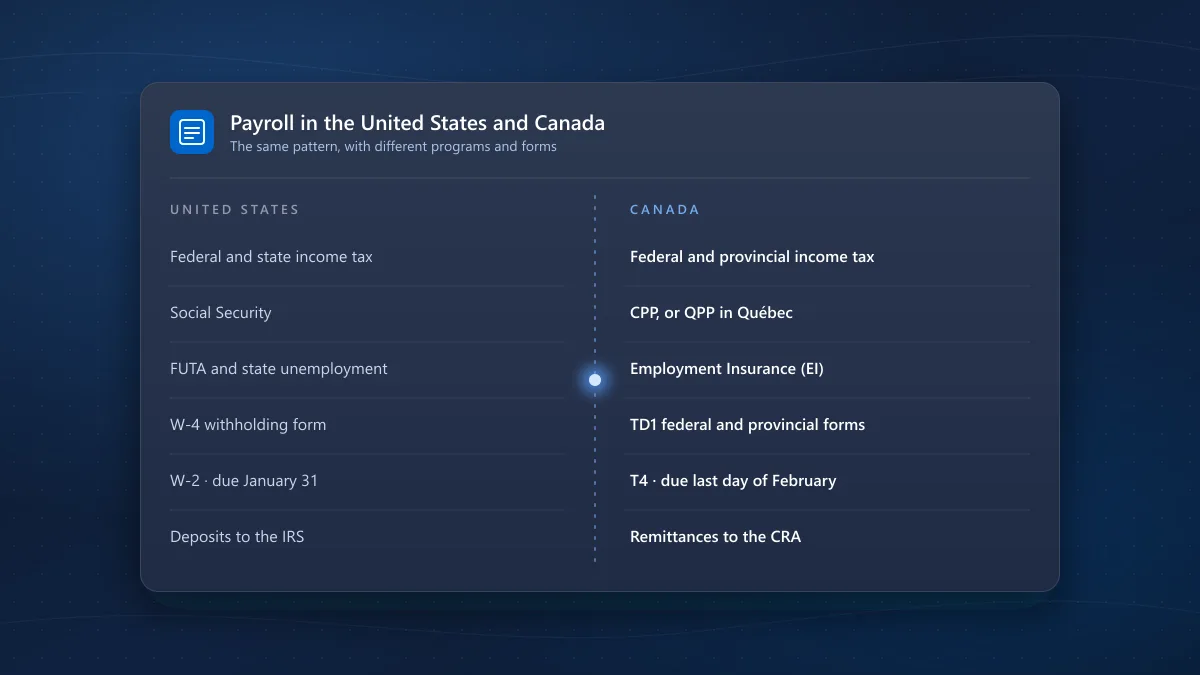
Canada vs U.S. payroll: what changes for a U.S. employer
The differences a U.S. company meets when it pays employees in Canada: provincial instead of state tax, CPP and EI instead of Social Security and Medicare, TD1 and T4 instead of W-4 and W-2, and stricter remittance deadlines.
Read the article -
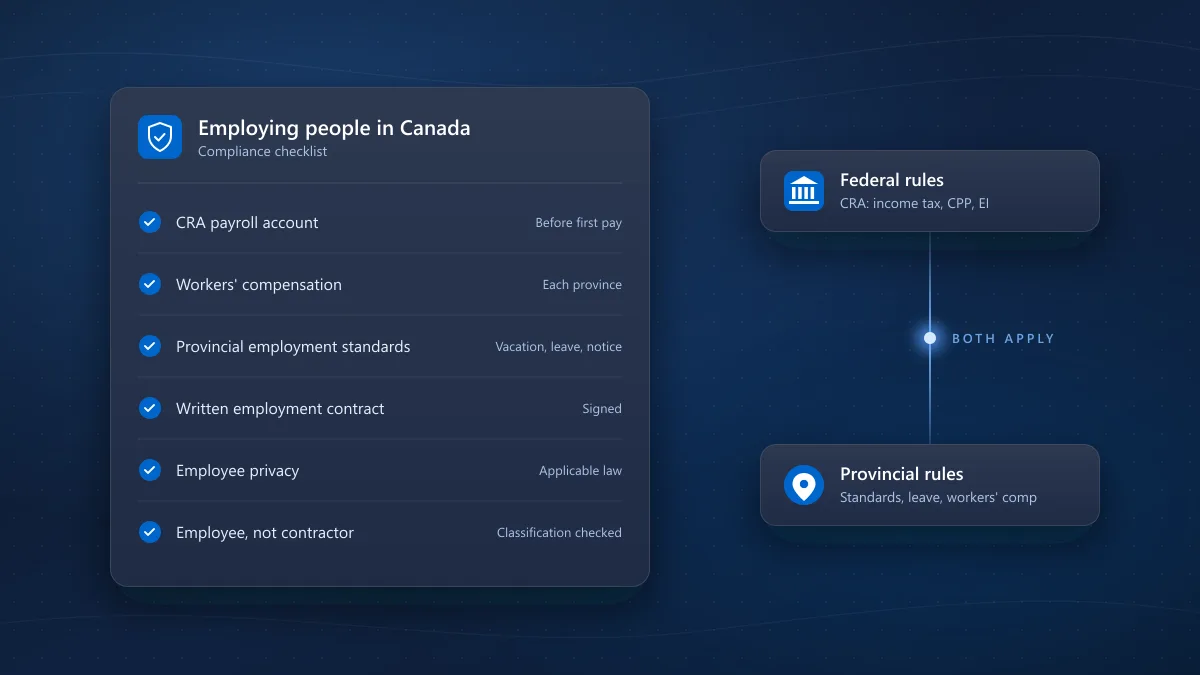
Compliance checklist for U.S. companies employing Canadians
A one-page checklist of what a U.S. company must get right when it employs people in Canada: registrations, payroll, provincial employment standards, workers' compensation, contracts, privacy and classification.
Read the article -
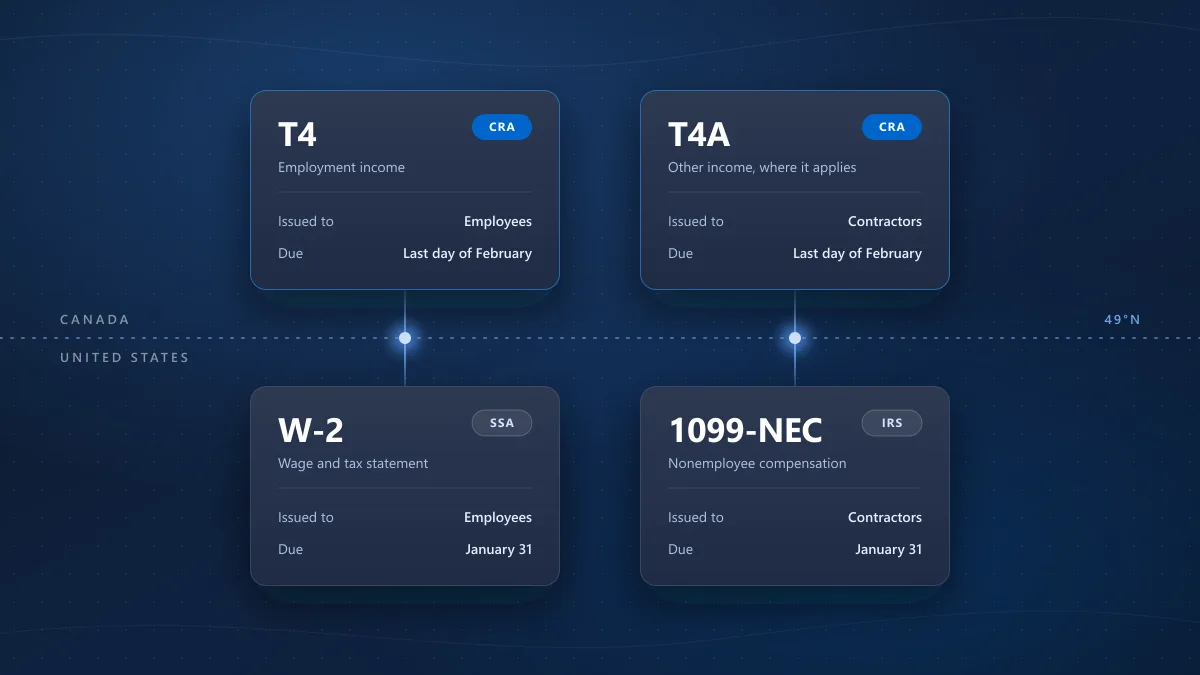
W-2 and 1099 vs the Canadian T4 and T4A: what U.S. companies should know
How the Canadian T4 and T4A compare with the U.S. W-2 and 1099-NEC: what each slip reports, when it is due, what it says about the employment relationship, and why a 1099-style contractor in Canada is often an employee.
Read the article
No articles match that yet.
Have a specific question?
Ask us about a role, a province, or a classification question on a short call.